Pompeii or Herculaneum: Which Should You Visit, and Can You Do Both?
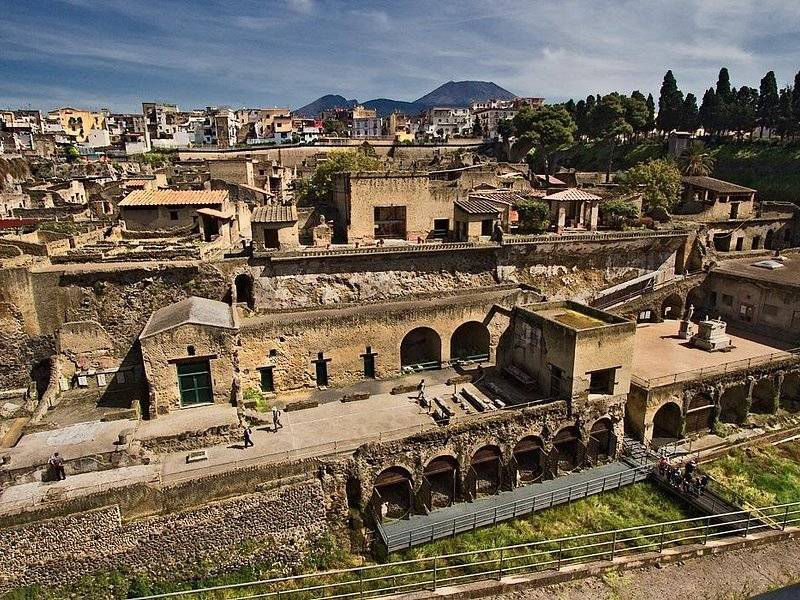
The short answer. If you only see one, see Pompeii — it is a whole city and it is the one you have imagined. If you have seen Pompeii, or you want to understand how Romans actually lived, Herculaneum is better preserved and takes half the time. They are twenty minutes apart on the same railway line, and doing both in a day is genuinely comfortable.
The same eruption buried both towns and preserved them in completely different ways, which is why the choice is real rather than a matter of taste. This is what actually separates them, and what a combined day looks like. Several naples italy pompeii tours listed here take in both.
The one difference that explains all the others
Pompeii was buried by falling pumice and ash, which crushed roofs and filled streets. Herculaneum was buried by pyroclastic flow — a much hotter, denser surge that sealed the town under some twenty metres of material and carbonised organic matter instead of burning it away.
The consequence: at Pompeii you walk through a city at ground-floor level. At Herculaneum you walk into houses with upper floors, wooden door frames, a wooden partition screen, beds and a rope-strung cot. Pompeii gives you the scale. Herculaneum gives you the furniture.
Side by side
| Pompeii | Herculaneum | |
|---|---|---|
| Size | 66 hectares, 49 excavated | About 4 excavated hectares |
| Time needed | 2–5 hours | 1.5–2 hours |
| Adult admission | €20 Express, €25 with the villas | €16 |
| Preservation | Ground floor, streets, public buildings | Upper floors, wood, fittings |
| Crowds | Capped at 20,000 a day and often near it | Far quieter |
| Walking | Long distances on basalt, no shade | Compact, some shade |
| Station | Pompei Villa dei Misteri | Ercolano Scavi |
| Best for | The scale of a Roman city | How a Roman house worked |
The case for Pompeii
It is a city, not a district. You walk a street grid with a Forum, a basilica, two theatres, an amphitheatre, public baths, bakeries, bars and brothels, and the sheer extent of it is the point — sixty-six hectares of Roman town with a volcano closing the view north. Nothing else in the Roman world gives you that.
It also has the things people arrive wanting: the casts, the House of the Faun, the Villa of the Mysteries. If this is your one visit to the Bay of Naples, it is not a close call. What is inside is set out on the houses and public buildings page.
The case for Herculaneum
It is better preserved and it is quieter, and both of those are worth a great deal. Four hectares means you see most of what is open in ninety minutes without the route planning Pompeii demands. Shade is easier to find. And because the surge carbonised rather than burned, the details survive: a wooden screen still standing across a room, a charred cot, mosaic and marble intact in houses that were plainly expensive.
The trade is that Herculaneum has no forum you can stand in, no amphitheatre and no famous frescoed villa. It is a rich seaside suburb rather than a city, and it reads that way.
Doing both in a day
This is the option most people underrate. The two sites are twenty minutes apart on the Circumvesuviana Naples–Sorrento line, and the sensible order is Pompeii first, while you are fresh and before the afternoon heat, then Herculaneum after lunch when its compactness is a relief.
Budget five and a half hours minimum for the pair, plus travel to and from your base. Guided options listed here do exactly that, with both admissions, both guided sections and the train ticket between them inside one fare — which removes the two things that usually break a self-organised double day, namely the second ticket and the timetable.
Which one, by visitor
- First visit to Italy, one day: Pompeii. It is the one you came for.
- Travelling with young children: Herculaneum. Shorter, shadier and easier underfoot — the wider version of that argument is in Pompeii with kids.
- Been to Pompeii before: Herculaneum, without hesitation.
- Interested in how Romans lived rather than what they built: Herculaneum, then Pompeii if time allows.
- Two days on the Bay of Naples: both, plus the National Archaeological Museum in Naples, which holds what was taken off both sites.
What each one costs, all in
The ticket is only part of it, and the gap between the two closes once travel and time are counted:
- Pompeii alone, from Naples: €20 ticket, about €6 return on the Circumvesuviana, half a day gone. Add €5 if you want the suburban villas.
- Herculaneum alone, from Naples: €16 ticket, about €5 return, two and a half hours door to door.
- Both, independently: two tickets, one extra train leg, and the timetable to manage. Around six hours.
- Both, guided: one fare covering both admissions, both guided sections and the train between them, from from $75.
The guided version is not much dearer than doing it yourself once both admissions are counted, and it removes the two things that break a self-organised double day: the second ticket queue and the connection.
A note on crowds
Pompeii is capped at 20,000 visitors a day and in July and August it runs close to it. Herculaneum has no comparable pressure, which changes the experience of both. If you are travelling in high summer and the idea of shuffling through the Lupanar behind four coach parties is the thing putting you off, Herculaneum is the answer to that worry rather than a compromise. The seasonal picture is on the weather page.
The two-hour version of Herculaneum
Because the site is compact, an unguided visit works better here than at Pompeii. Come down the ramp for the view over the whole excavation, then take the House of the Deer, the College of the Augustales, the Central Baths and the House of the Wooden Partition, which still has its screen standing. The boat sheds along the ancient shoreline are the last stop and the one that stays with people.
That is ninety minutes at a walk and two hours if you stop properly. Nothing about it needs the route planning Pompeii demands, which is the whole argument for adding it to a day rather than treating it as a second trip.
Getting to each
Both sit on the same Circumvesuviana line out of Naples. Ercolano Scavi is about fifteen minutes from Naples and Pompei Villa dei Misteri about thirty-five, so from a Naples base either is a short morning. From Sorrento the order reverses — Pompeii is closer. Full detail, including the station names that catch people out, is on getting to Pompeii, and ticket rules on the visiting page.
The combined day is the one that answers the question properly, and it costs less than two separate trips.
Every guided option, with what each fare covers, is compared on Pompeii Italy Tours.
Tours that take in both towns
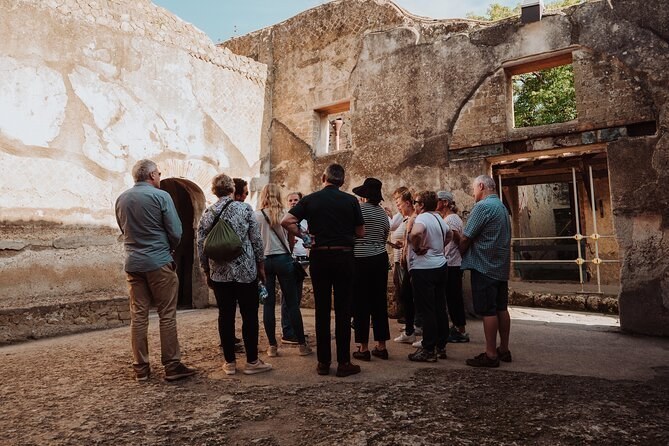
Pompeii and Herculaneum Small Group Tour with an Archaeologist
Both towns, both tickets, and a choice of four cities to start from.
From $75 per person
Check Availability
Pompeii: Small-Group Tour of Pompeii and Herculaneum
Five and a half hours across Pompeii and Herculaneum, train ride included.
From $116 per person
Check Availability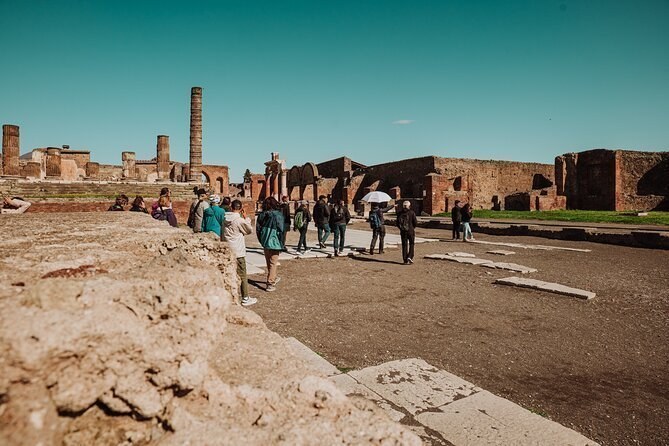
Pompeii Small Group Tour with an Archaeologist
Two hours, an archaeologist and the Express ticket, at the lowest fare here.
From $34 per person
Check Availability