Pompeii with Kids: What They'll Love, How Long to Allow and the Bits to Skip
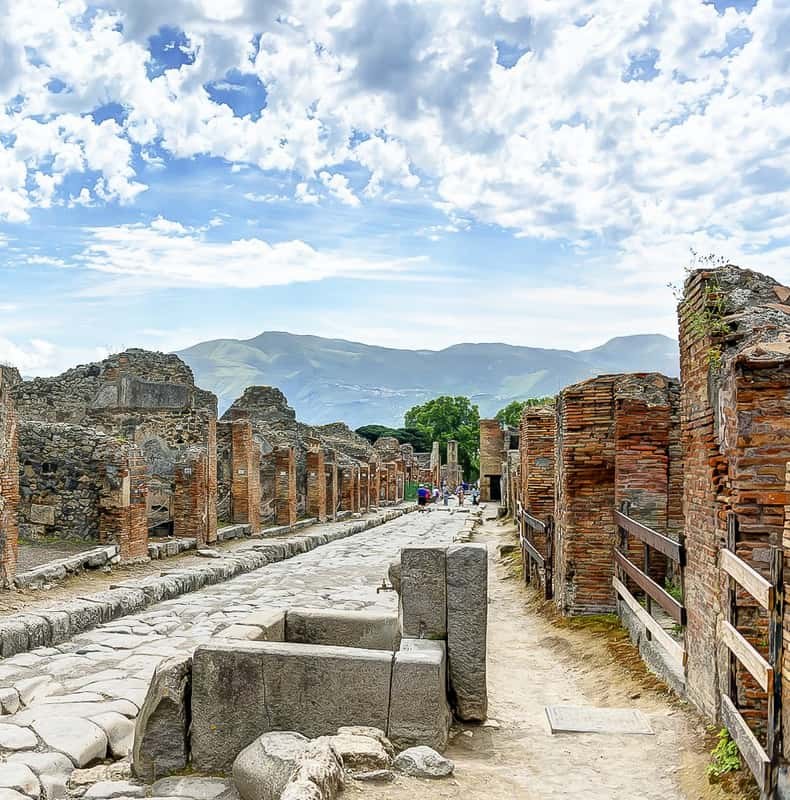
The short answer. Yes, and better than most museums. Under-18s get in free. Allow two hours rather than four, go at 9:00, enter at Piazza Anfiteatro if you have a buggy, and carry more water than you think. The three things children actually remember are the cart ruts, the stepping stones and the casts.
The worry parents bring to Pompeii is that it is a large amount of broken masonry and their children will be bored in twenty minutes. In practice it is one of the better archaeological sites for children, because it is a town rather than a monument: streets, shops, a bakery, a takeaway counter, a theatre, a stadium. What needs planning is the heat, the surface and the length. The Pompeii Italy guided tours listed here are short enough to suit.
Is it worth it for a family?
Yes, with two conditions. Keep it to two hours, and go early. Children engage with Pompeii through the ordinary things — the ruts worn into the road, the counters where food was sold, the graffiti — rather than through architecture, and two hours of that is plenty. Four hours in August is not a family day out.
The cost side is unusually kind. Admission is free for under-18s, so a family of four with two children pays for two adults. Bring a passport or ID card for each child, because the free rate is checked at the gate.
What children actually remember
- The cart ruts. Grooves worn into stone by wheels. Children get the scale of it immediately in a way they do not get from a column.
- The stepping stones. Raised blocks across the street with gaps for cart axles. They are, in effect, a puzzle you walk over.
- The bakery and the bar counters. Millstones and sunken jars, opening straight onto the pavement.
- The casts. Handled honestly, these hold most children completely — and knowing they are plaster poured into a cavity, not petrified people, usually helps rather than disappoints.
- The amphitheatre. If you enter at Piazza Anfiteatro you reach it first, and it is the one building whose purpose needs no explaining.
Which entrance, with children
| Entrance | Reached from | Good for a family because |
|---|---|---|
| Porta Marina | Pompei Villa dei Misteri station | Closest to the Forum and to every guided meeting point. Uphill on arrival. |
| Piazza Esedra | The same station | Flatter than Porta Marina and a minute further on. |
| Piazza Anfiteatro | Pompei Santuario, or the Pompei Link bus | The amphitheatre first, and the start of the step-free route. |
If you have a buggy, use Piazza Anfiteatro. The park's Pompeii for All route runs over 3.5 km from there on a graded surface and it is designed for wheels. The park is honest about its limits — some ramps exceed 8%, there are sudden drops under 5 cm — but it works, and pushing a buggy over raw basalt does not. More on the layout is on the site map.
What to prepare for
The surface. Basalt slabs, high kerbs and ruts. Trainers, not sandals, and definitely not wheeled scooters — the regulations exclude them anyway.
The heat. This is the real constraint. Pompeii is a roofless city with almost no shade, and travellers on these tours record temperatures over 40°C on the stones in high summer. Hats, sunscreen, and more water than seems reasonable. The month-by-month figures are on the weather page.
The food. There is one cafeteria for 66 hectares, eating is allowed only in designated places, and no ticket lets you leave and come back. Feed everyone before you go in.
The bags. Nothing over 30 × 30 × 15 cm comes through the gate, which rules out a large changing bag. There are three baby-changing facilities inside the ancient city, with keys collected on site.
The one room families usually route around
The Lupanar was a brothel and its walls carry explicit paintings above the stone beds. It is on most guided routes and it is a normal part of a Roman town, so there is nothing to be shocked by — but it is worth deciding in advance rather than at the door. Say so when you book a private guide and the route simply goes another way. On a group tour, step out for five minutes and rejoin at the next stop.
How long, realistically
| Age | Sensible length | Why |
|---|---|---|
| Under 6 | 60–90 minutes | The surface is hard work and the distances are long. Enter at Piazza Anfiteatro and see the amphitheatre. |
| 6–11 | 2 hours | A standard guided walk is exactly this length and covers the things that hold their attention. |
| 12+ | 2–3 hours | Long enough to add the theatres or the Villa of the Mysteries. |
Guided or on your own?
For families, a guide earns their fee twice over, because the job is not information but pace. Reviewers of these tours describe guides parking groups in shade, taking water breaks on request and reordering the route around the crowds — all of which matters far more with children than the history does. A private guide will also adapt to the slowest walker in the party, which a twenty-person group cannot.
The two-hour small-group walk with an archaeologist starts at from $34 with the ticket included, and the children are free. That is a low bar for the difference it makes. The wider argument is in the guide to whether you need one.
A ninety-minute route that works
If you are doing it without a guide, this is the shape that holds up with children, entering at Piazza Anfiteatro:
- The Amphitheatre. Straight in, and the one building that explains itself. Let them walk out into the arena.
- The Large Palaestra. Next door, an enormous exercise ground with a pool. Good for ten minutes of running about, which buys you the next hour.
- Via dell'Abbondanza. Walk west along the main street. The ruts, the kerbs, the stepping stones and the bar counters are all on this stretch.
- The Stabian Baths. Hot, warm and cold rooms with the heating system visible. Children get underfloor heating immediately.
- The Forum. Finish in the open square with Vesuvius behind the temple, which is the picture everyone wants and the natural end of a walk.
That is about two kilometres, downhill more often than up, and it ends near the Porta Marina gate for the train home. What each of those buildings is sits on the houses and public buildings page.
What to combine it with
Herculaneum is smaller, shadier and closer to the scale of a child's attention span — the comparison is in Pompeii or Herculaneum. Mount Vesuvius involves a ninety-minute walk on loose ground and is a poor idea under about ten. Practical answers to everything else are in the FAQs, and tickets on the visiting page.
Two hours, an early start and free entry for the children is the version of this day that works.
Every guided option, with what each fare covers, is compared on Pompeii Italy Tours.
Short guided walks that suit a family
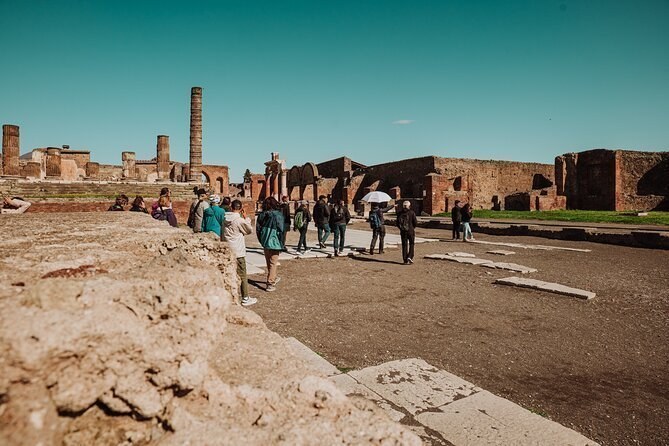
Pompeii Small Group Tour with an Archaeologist
Two hours, an archaeologist and the Express ticket, at the lowest fare here.
From $34 per person
Check Availability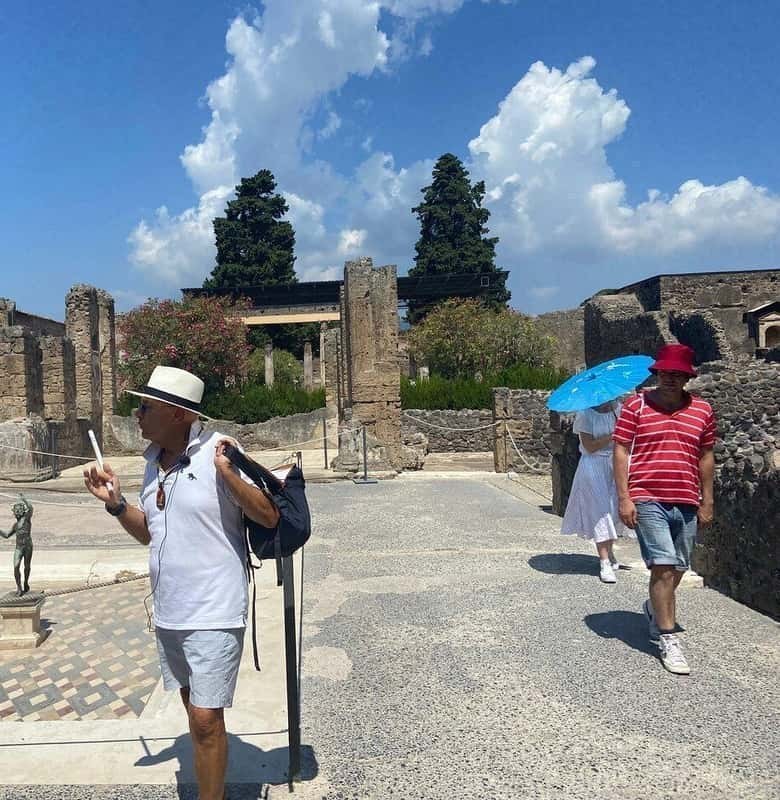
Sorrento: Skip-the-Line Pompeii Express Tour by Train
Round-trip train from Sorrento, skip-the-line entry and two hours inside.
From $59 per person
Check Availability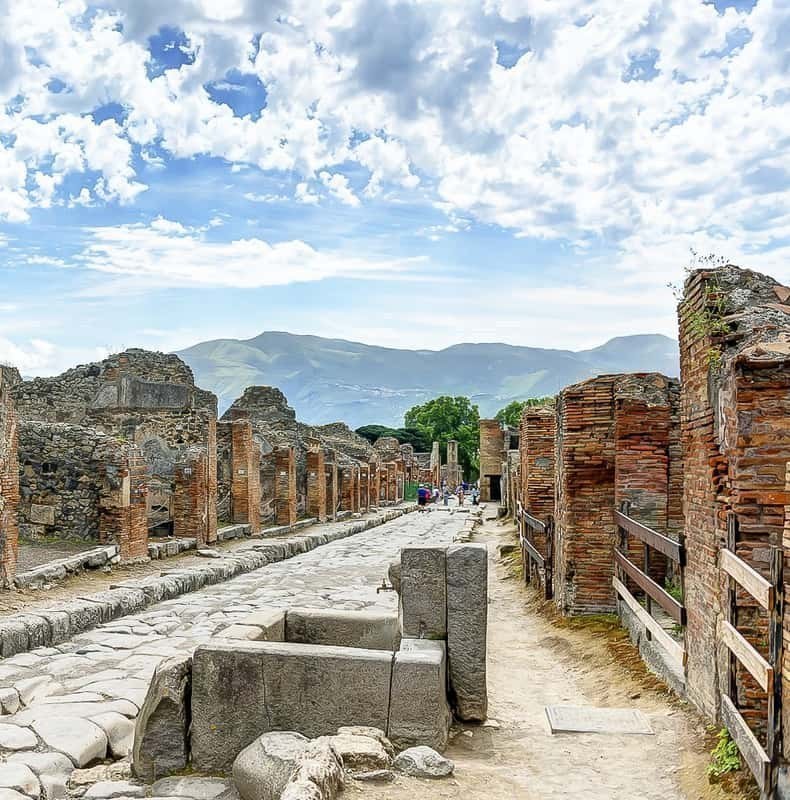
Pompeii: 2H Private Tour with an Archeologist Guide
A private two-hour guide priced per group of up to five.
From $319 per group, up to 5
Check Availability